From swelling to discharge, Dr. Catherine Bagley shares the early breast cancer symptoms that require prompt medical evaluation.
Key Takeaways: Early breast cancer symptoms can appear between routine mammograms, so it is important to notice changes that are new, persistent, or limited to one breast. Most breast changes are not cancer, but a recent normal mammogram should not delay evaluation of a new lump, nipple change, skin change, swelling, or unexplained pain.
- Early warning signs may include a breast or underarm lump, thickening, skin dimpling, nipple retraction, unusual discharge, shape changes, or swelling near the collarbone.
- Inflammatory breast cancer may cause rapid redness, warmth, heaviness, enlargement, or orange peel-like skin without a distinct lump.
- Triple negative breast cancer does not have a unique visible symptom pattern and can only be definitively identified through biopsy testing.
- Online images can explain breast changes, but they cannot confirm whether a symptom is harmless.
- New or quickly changing symptoms should be evaluated rather than watched until the next mammogram.
Early breast cancer symptoms can appear at any point between routine mammograms. You may notice a new lump, but often symptoms present as a change in your nipple or an area of skin that suddenly looks different. Many breast changes are caused by conditions other than cancer, but a recent normal mammogram is not a reason to ignore something new.
Screening mammograms remain one of our most valuable tools for finding breast cancer early, often before it can be felt. However, they cannot replace knowing what is normal for your own breasts. Paying attention between screenings gives you another way to protect your health. Let’s explore what to look for and when to reach out to your provider.
Why breast awareness still matters between mammograms
Breast tissue can change with menstrual cycles, pregnancy, breastfeeding, perimenopause, menopause, medications, and aging. Tenderness or lumpiness may come and go. What deserves attention is a change that is new for you, persists, or affects only one breast.
Some early breast cancers cause no noticeable symptoms. That is why staying current with your recommended mammogram schedule is important, even when everything feels normal. If a breast change appears between appointments, contact us rather than waiting for your next screening date.
Related: What to Know Before a Self-Breast Exam
A screening mammogram is intended for someone who does not have symptoms. Once you report a lump, nipple change, or another concern, you may need a clinical breast exam and diagnostic imaging instead.
Breast cancer earliest symptoms to watch for
Breast cancer’s earliest symptoms are not always dramatic. A small area of thickening may develop rather than a distinct lump. A nipple may begin pointing in a different direction, or one breast may develop a change in shape.
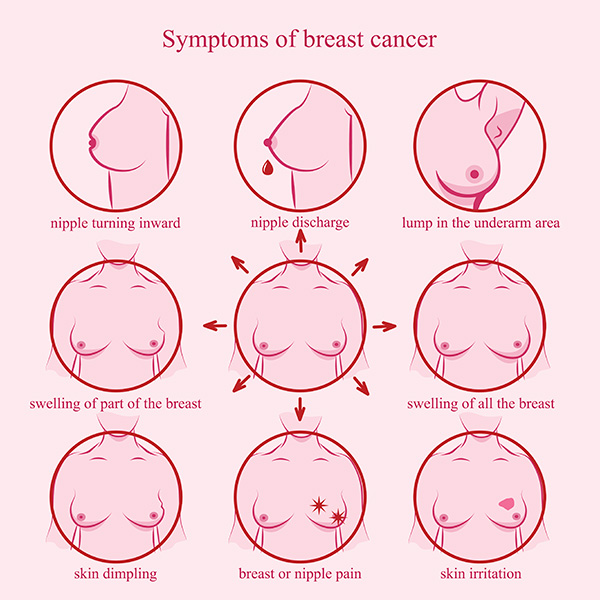
Possible warning signs of breast cancer include:
- a new lump in the breast or underarm that could be as small as a pea
- thickening, firmness, or swelling in one area
- a change in breast size, contour, or shape
- skin dimpling, puckering, or irritation
- redness, darkening, or flaky skin
- a nipple that begins pulling inward
- new nipple discharge, especially if it is bloody
- persistent pain in one area of the breast
- swelling near the breast, underarm, or collarbone
Having one of these symptoms does not mean you have cancer. It does mean the change should be evaluated. Watching a concerning symptom for months in hopes that it goes away instead of addressing it will undo any benefits of early detection.
Does breast cancer always begin with a lump?
A lump is the symptom most women associate with breast cancer, but breast cancer does not always begin with a palpable lump. Some cancers cause skin, nipple, or shape changes instead. Others are visible on a mammogram before they produce any outward signs.
A concerning lump may feel firm or different from the surrounding tissue, but touch alone cannot determine whether a mass is cancerous. Benign cysts and other noncancerous conditions can also cause lumps. Any new mass is a reason to schedule an exam quickly, especially if it remains after your next period or if it appears after menopause.
Nipple and skin changes can be early clues
Look for changes rather than focusing on whether your breasts have the supposedly “correct” appearance. A nipple that has always pointed inward may be normal for you. A nipple that suddenly retracts is different. The same is true for natural differences in breast size, skin texture, and pigmentation.
If you experience any new discharge, especially if it is bloody or occurs without squeezing the nipple, please reach out to your VPFW provider. Persistent scaling around the nipple also deserves attention. Skin dimpling may look like a small indentation or an area that pulls inward when you raise your arm.
Breast redness and irritation are often related to infection, friction, or a skin condition. If the change does not improve, spreads quickly, or comes with swelling, warmth, or heaviness, it needs prompt evaluation.
Inflammatory breast cancer symptoms can appear rapidly
Inflammatory breast cancer symptoms often involve rapid changes across a larger area of the breast. This uncommon form of breast cancer may not cause a distinct lump. Instead, the breast can become swollen, warm, heavy, or noticeably larger over a short period.
The skin may look red, reddish purple, bruised, or darker than usual. Dimpling can create a texture that resembles the surface of an orange. Other possible changes include tenderness, an inverted nipple, and swelling near the underarm or collarbone.
These symptoms can resemble mastitis or another infection. They should still be assessed quickly, particularly if you are not breastfeeding or treatment for a suspected infection is not helping.
Are triple negative breast cancer symptoms different?
Triple negative breast cancer symptoms are generally the same as symptoms linked to other invasive breast cancers. A woman may notice a lump, thickening, swelling, nipple change, or skin change. Some women have no outward symptoms and learn about the abnormality through imaging.
The term “triple negative” describes the tumor’s biomarkers. It cannot be determined by how the breast looks or how a lump feels. Testing tissue from a biopsy shows whether the cancer lacks estrogen receptors, progesterone receptors, and excess HER2 protein.
Triple negative breast cancer can grow more quickly than some other types, which makes timely follow-up important. A symptom cannot tell you the subtype, but it can tell you that your breast needs to be examined.
What are the symptoms of metastatic breast cancer?
Metastatic breast cancer is breast cancer that has broken away from the original tumor in the breast and spread to other parts of the body. The symptoms of metastatic breast cancer are different from the subtle breast changes most women are checking for between routine mammograms because they do not usually represent the earliest stage of breast cancer.
Metastatic breast cancer symptoms usually relate to where cancer has spread in the body. This stage of disease may cause bone or back pain, unexplained fractures, shortness of breath, a persistent cough, abdominal swelling, jaundice, severe headaches, seizures, or vision changes. Unusual fatigue may also occur.
These symptoms are far more likely to have causes other than metastatic breast cancer, especially in someone who has never been diagnosed with breast cancer. However, women with a personal history of breast cancer should tell their care team about persistent or unexplained changes rather than assuming they are unrelated.
When should you contact your provider?
Contact us if you notice a new lump, skin change, nipple change, discharge, swelling, or persistent pain. Seek care promptly if the breast changes quickly or becomes red, enlarged, warm, or dimpled.
You do not need to decide whether a symptom is serious before making the call. That is what an evaluation is for. We can review the change, perform a clinical breast exam, and help determine whether diagnostic imaging is needed.
What happens after you report a breast change?
The next step depends on the symptom, your age, your personal risk, and your screening history. We may recommend a diagnostic mammogram, ultrasound, or another imaging test. A radiologist may focus on a specific area and compare the images with your prior mammograms.
Most breast changes are not cancer. Following up is still important because an exam and imaging can provide answers. If further testing is needed, finding a problem earlier can open the door to more treatment options.
Stay aware without living in fear
Breast awareness should help you feel informed, not frightened. You do not need to inspect yourself constantly or memorize every possible symptom. Learn how to do self-breast exams, become familiar with how your breasts normally look and feel, then speak up when something meaningfully changes.
Annual screening mammograms and attention between screenings work together. Keep your screening appointments, know your personal risk factors, and contact us about new concerns. You deserve a clear answer rather than months of uncertainty.
Schedule an appointment at one of our Richmond, VA OB/GYN locations to learn more about how mammography supports early detection and which early breast cancer symptoms to watch for between screenings.
Last updated October 22, 2026