Dr. Padmini Santosh explores whether there is a link between female hair loss and hormonal changes due to pregnancy, menopause, thyroid issues, and PCOS. She also shares expert tips for improving hair health.
Summary:
Hair loss in women is common and often linked to hormonal changes due to pregnancy, menopause, thyroid issues, and PCOS. Understanding the cause is crucial for effective treatment.
Main Points:
- Some hair loss is natural, but excessive daily shedding can be a cause for concern.
- Postpartum hormonal changes can cause hair shedding.
- Thyroid imbalances, menopause, and PCOS are common hormonal causes of hair loss.
- Certain lifestyle changes can improve hair health
- Consult a doctor for diagnosis and treatment options tailored to individual needs.
Even if you don’t see it in the mirror, you see it in the shower drain and between the tines of your hairbrush. You’re losing your hair, and you’re worried.
If you’re noticing hair loss, we promise you are not alone. According to Harvard Health, about one-third of all women lose their hair at some point in their lives.
We realize that, for many women, losing hair can feel like a loss of identity. The goal of this article is to help you achieve peace of mind and find solutions for any underlying concerns. Continue reading to learn what causes female hair loss and what to do if it happens to you.
Is Hair Loss in Women Normal?
Losing some hair is natural. Every strand of hair on your head eventually goes through three phases:
- The anagen phase, during which hair is actively growing. It lasts the longest: 2-8 years.
- The catagen phase, during which follicles begin to shrink. It lasts about 2 weeks.
- The telogen phase, during which hair falls out. It typically lasts about 2-3 months.
All to say, some hair in your brush or shower drain is completely normal. According to the American Academy of Dermatology, it’s not uncommon to lose 100 strands of hair per day! Hair loss only becomes clinically significant if you begin losing more than 100 strands daily for a sustained period.
It can often be more difficult to notice hair loss in women than in men. While men go bald, women might experience thinning or a wider part. You might notice that your ponytail is less dense or that you can see more of your scalp during styling.
There is a difference between hair loss and hair shedding. Hair shedding, or telogen effluvium, is most common after a stressful event. Hair loss, or anagen effluvium, is when something is preventing your hair from growing.
Women with hair loss need to address the underlying cause before their hair will grow back. In many cases, the cause is hormonal.
What causes female hair loss after pregnancy?
It’s common knowledge that a pregnant woman’s hair becomes lush and shiny during pregnancy. It’s part of the “pregnancy glow” many people talk about.
During pregnancy, your body gets a boost of estrogen, which can lengthen the anagen phase of hair growth. This means far less shedding while you’re pregnant. Likewise, when your hormone levels are high, your body might produce more sebum, an oily substance secreted from glands in your hair follicles that protects your skin from drying out. These natural oils can make your hair appear naturally shiny and healthy, and the extra long growth phase means you have significantly more hair than usual.
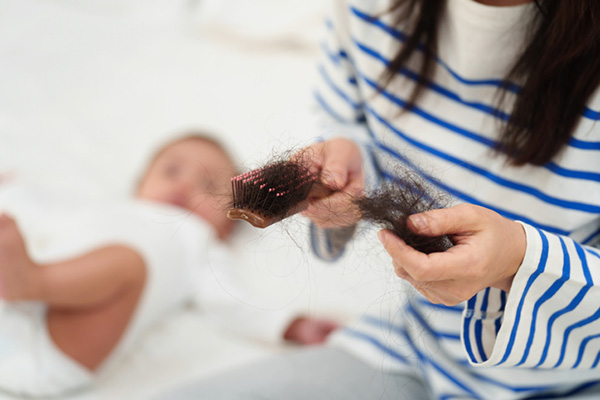
Less frequently, we talk about what happens in the postpartum period when hormone levels drop back to normal. Your body sheds the pregnancy hormones and begins shedding the retained hair — seemingly all at once. Peak loss is around 3-5 months postpartum. While it may seem dramatic for a period, this shedding is completely normal. It just feels awkward to shed so much in such a short period after going a long time without shedding much at all.
In general, postpartum hair loss is not hair loss at all, just extra shedding as your hair returns to its pre-pregnancy state. There’s nothing preventing your hair from growing back. A nutritious diet, a good headband, and patience can help you get through the awkward regrowth phase.
Other Hormonal Reasons Women Lose Hair
Clearly, there is a link between hormones and hair loss. In the case of pregnancy, there is no underlying problem. If you aren’t postpartum, however, sudden, unexplained hair loss might be a sign of a hormone imbalance. Excessive shedding is a sign that you should see your doctor.
Changes in Thyroid Hormones
A thyroid imbalance is one of the leading causes of hair loss in women. Your body needs thyroid hormones to regenerate cells, including hair cells.
Hypothyroidism refers to a low level of thyroid hormones, while hyperthyroidism refers to a high level of thyroid hormones. These are common symptoms of autoimmune diseases like Hashimoto’s disease and Grave’s disease. Luckily, hair loss associated with these conditions is usually temporary and reversible.
Your primary care doctor can screen for these conditions by completing a thyroid exam and blood test. Once you begin treatment, your body will typically begin producing healthy hair again.
Changes During Menopause
Losing hair as a woman is often thought of as a symptom of menopause, but it is likely related to aging.
Medically, menopause begins after a woman has gone one full year without a menstrual period. According to the WHO, menopause marks the end of a woman’s reproductive years and comes with many hormone changes. Most notably, women experience a drop in estrogen and progesterone levels during this life stage.
Hormones are chemical signals that tell your body what to do. During menopause, there is a drop in estrogen and progesterone production. There is also a drop in androgens but at a relatively lower rate than the estrogen in the body. Androgens are a group of sex hormones, primarily testosterone, that play a role in various bodily functions.
As a result of the drop in androgen production, your hair will be shorter and thinner and may take longer to grow. It can be more brittle as well and can break easily.
Several lifestyle changes can help prevent hair loss during menopause (see tips below). There are also medical interventions that can help. Speak to a dermatologist about diet, exercises, and medications like Minoxidil.
Polycystic Ovarian Syndrome (PCOS)
Polycystic Ovarian Syndrome is a common hormone imbalance that can trigger androgen overproduction. For some women, this can cause excessive hair growth. For others, it can lead to androgen overstimulation. The result is thinning hair or hair loss, which is called androgenic alopecia.
Hair thinning and loss is only one symptom of PCOS, which can impact your fertility and quality of life. Your gynecologist can diagnose the condition using blood tests, ultrasound images, and a pelvic exam. Early diagnosis can reduce the risk of long-term complications.
PCOS treatment focuses on symptom management and may include medications and lifestyle changes. Every woman is different. Your OB/GYN will prescribe the treatment that will work best for you and your symptoms. Once you address the underlying cause, you may see an improvement in hair loss.
Non-hormonal Causes of Hair Loss in Women
In addition to the hormonal reasons mentioned above, dermatologists can also explore non-hormonal reasons for hair loss. Medications like antidepressants and blood thinners can disrupt the natural growth cycle of your hair. Therapies such as chemotherapy for cancer can also cause hair loss because they are designed to target rapidly dividing cells, which include hair follicles.
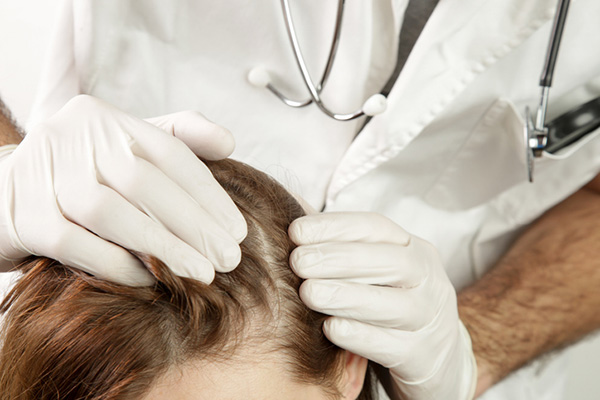
If your hair loss is not linked to a hormonal imbalance, therapy, or medication, it is likely that lifestyle factors like stress or nutritional deficiencies are the cause. This type of hair loss is usually temporary, and making the lifestyle adjustments below can help.
Tips for Improving Hair Health
For hair loss that is due to lifestyle factors like stress or lack of nutrition, making the following changes should help improve your hair health:
- Relieve/Avoid stress, which can cause your hair to move into the shedding phase too quickly.
- Eat enough protein, which is essential for building and repairing tissue in your body.
- Get enough iron, which is important for carrying oxygen to your cells, including hair follicles.
- Get enough vitamin B12, including biotin, which helps maintain healthy hair.
When to see a Doctor about Female Hair Loss
The only way to confirm the cause of your hair loss is by seeing a doctor. If you experience excessive shedding for a continued period of time, visit your primary care provider to discuss all of your symptoms. They can run tests to help determine if there’s a connection between your hormones and hair loss, form a diagnosis, and discuss treatment options that could improve your hair health. They can also refer you to your OB/GYN if they suspect you may have PCOS or to a dermatologist for hair loss treatment.
While the team at VPFW doesn’t treat hair loss specifically, we can treat hormonal conditions like PCOS that may be causing it. Determining the root causes of your hair loss struggles is the first step to finding a solution. Schedule an appointment to get the answers you need.
To make an appointment with an OB/GYN provider at one of our Richmond, VA, locations, call VPFW at 804-897-2100 or message us to schedule online.